

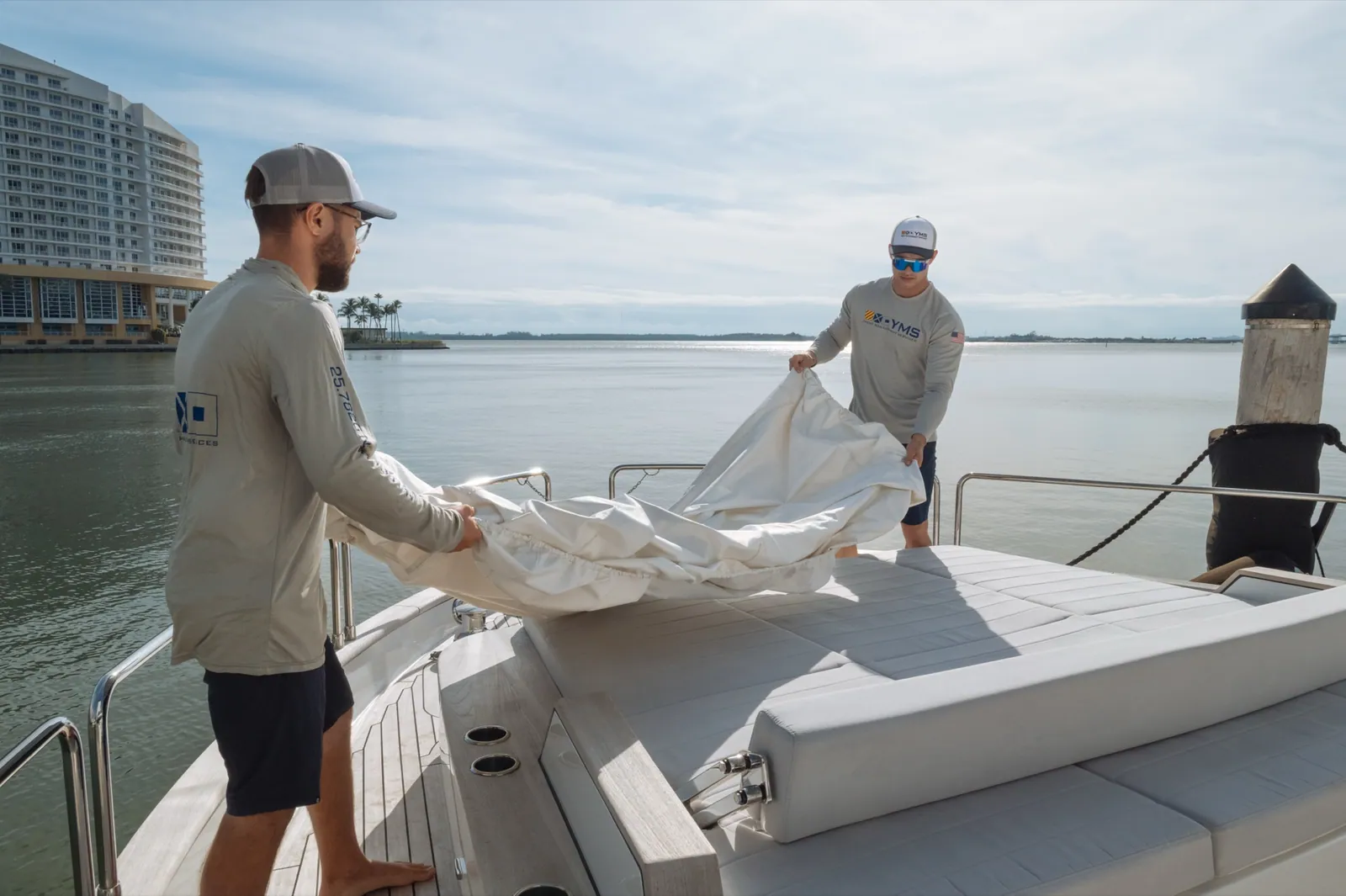
The plan has to name someone who is here.
Hurricane planning. Fort Lauderdale and Miami.
What the carrier actually asks for.
Most policies written on a vessel kept in Florida require a named storm plan. Many require it in writing, with the location the boat will go to and a party responsible for getting it there. Requirements vary by carrier and by vessel, so the plan we source is built to the language in your policy rather than to a template.
That last requirement is the one that catches owners. A plan that depends on the owner driving to the dock is not a plan if the owner is not in Florida in August, which for most of ours is the case.
A named storm plan generally has to state four things:
- Where the boat goes The named location, contracted well in advance of the season.
- Who is responsible for moving it A party who can act on the vessel without the owner present.
- When the move happens The window the plan sets, which is what makes it a procedure instead of a decision taken on the morning.
- What is done to the vessel The readiness preparation the plan calls for, carried out to the document.
We do not write policy and we are not your broker. We read what your policy asks for and build the plan to it.
The season runs on a calendar, worked well before it opens.
Hurricane season runs June 1 through November 30. Almost everything that makes a plan work happens before it opens.
- February
- The plan gets sourced and the location gets contracted. Space is finite and it is spoken for early. That is why this work happens now, months before the season opens.
- June 1
- The season opens. From here, the plan on file is the plan you have.
- August to October
- The peak of the season, and the stretch in which a plan is most likely to be used.
- The moment a storm is named
- Carriers generally will not permit changes to a plan once a storm has a name. Whatever is on file is what your policy holds you to.
- Inside the window
- The boat moves to the location the plan names, prepared the way the plan describes, before the window closes.
- November 30
- The season closes. The plan stays on file with its expiry date against it, and the renewal notice goes out before the next one opens.
Those are the dates of the Atlantic hurricane season. What your carrier permits, and until when, is set by your policy.
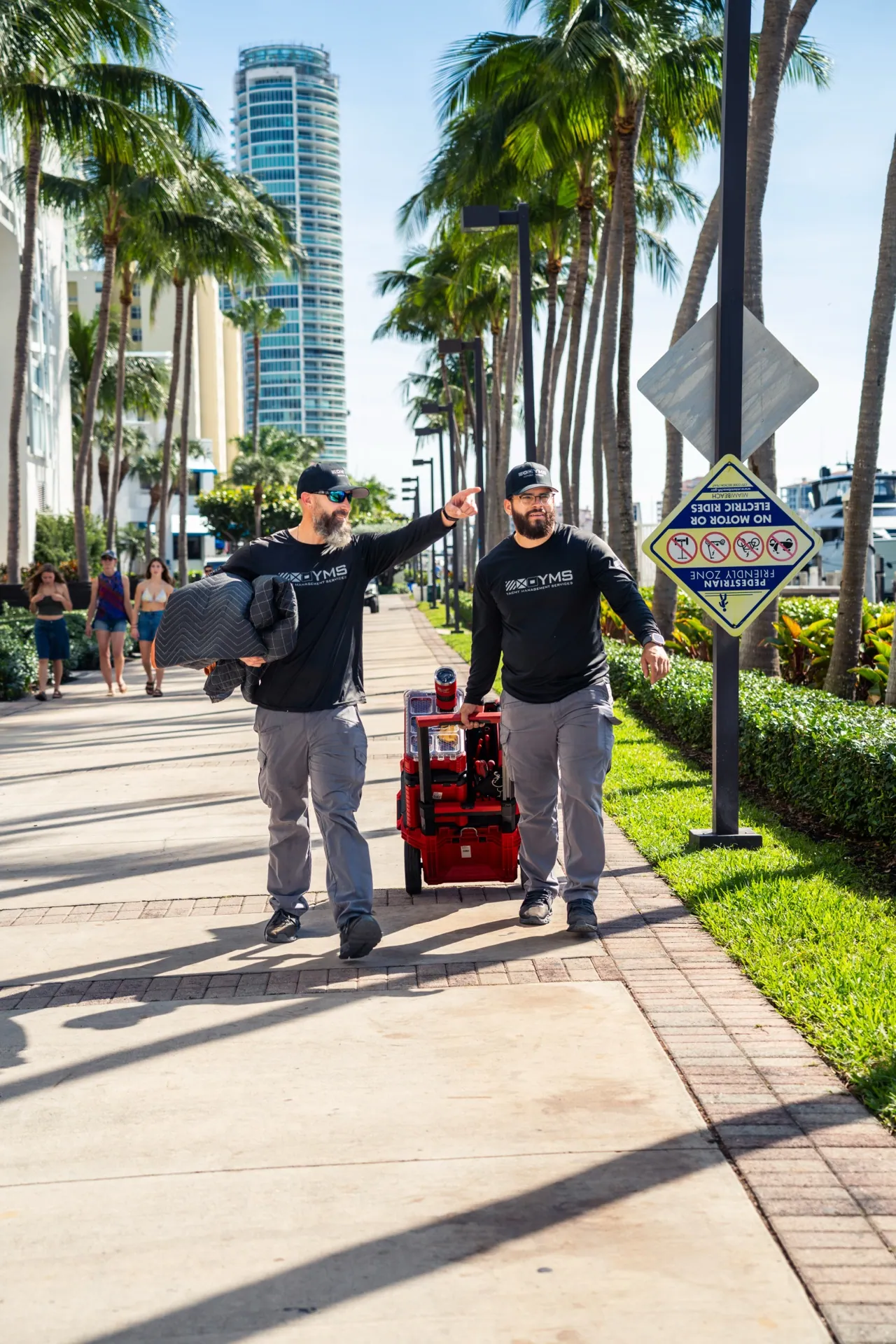
Five things, done in this order.
The service is hands-on. We source the plan and we keep the paperwork current. When a storm has a name, we move the boat.
- Hurricane plan sourcing and location securing We find the plan and the location that suit the vessel, the dockage and the policy, then hold the space before the season opens.
- Documentation management for your insurer The plan, the location agreement and the certificate of insurance, kept together and produced in the form your carrier asks for.
- Renewal notifications before the plan lapses The expiry date sits against the document in Mariner Pro, so the notice goes out ahead of the lapse rather than after it.
- Hurricane readiness preparation of the vessel The vessel prepared to what the plan calls for, by the crew who are on it every week anyway.
- Delivery to the designated hurricane location Our own captains, inside the window the plan specifies.
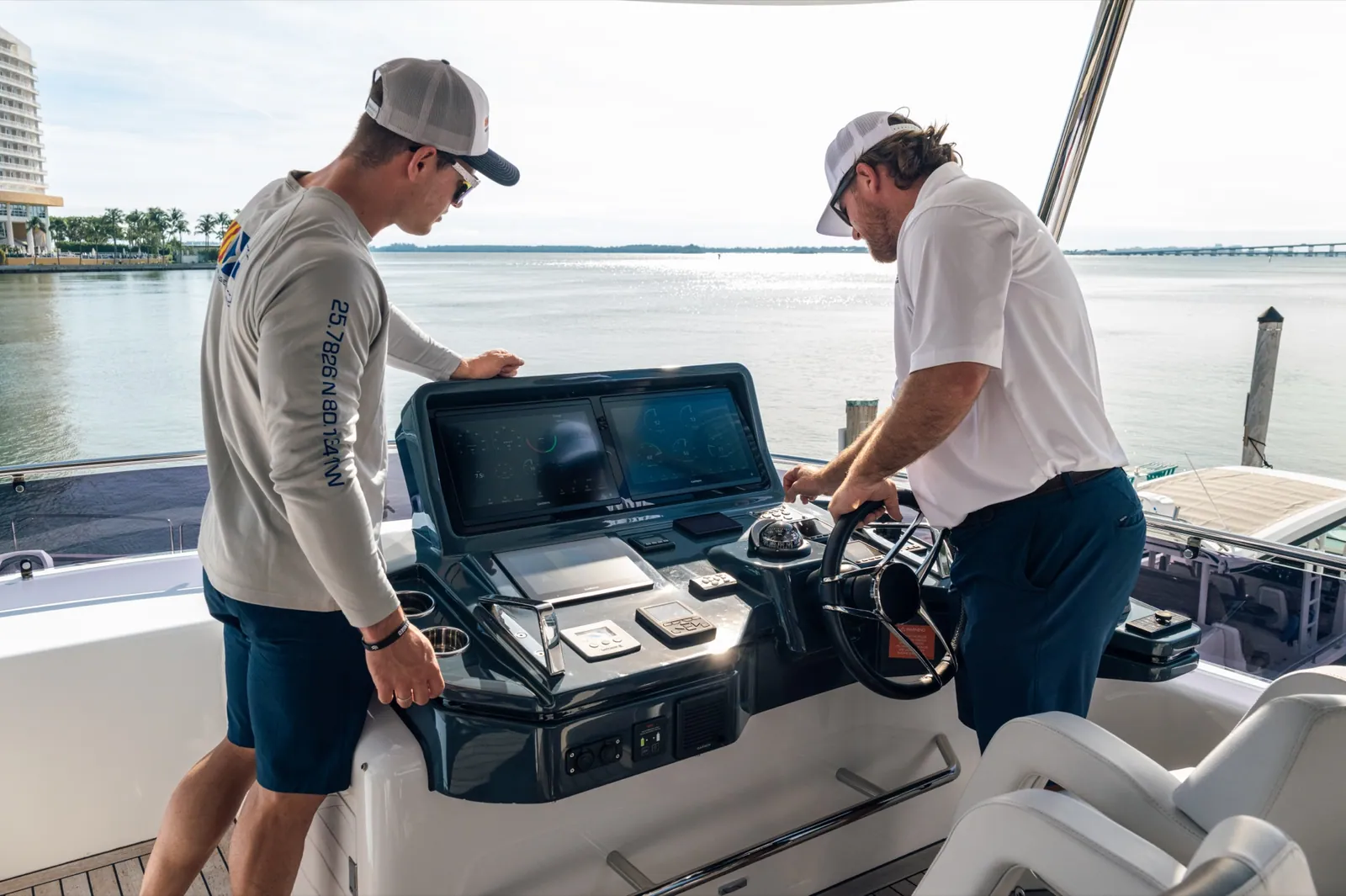
Somebody has to move it. We do.
Delivery to the hurricane location is part of the service, executed by a captain we place and answer for, inside the window your plan specifies. A network of about two hundred captains and crew works across the boats in our care, so the person taking yours is usually someone who has already run it.
The plan and the certificate live in the app.
Mariner Pro holds the hurricane plan and the certificate of insurance as documents, each with its expiry date against it and an alert before it lapses. Registrations, system specifications and USCG safety items sit in the same place. When your carrier asks for the plan, nobody is searching an inbox for an email from February.
Questions owners ask before the season.
Does my insurance require a hurricane plan in Florida?
Most policies written on vessels kept in Florida require a named-storm plan, and many require it in writing with a named responsible party. Requirements vary by carrier and by vessel, so the plan we source is built to the language in your policy.
When should a hurricane plan be arranged?
In February. Carriers generally will not permit changes once a storm has been named, and the safe-harbor locations that matter are contracted well before the season opens on June 1.
Who moves the boat when a storm is coming?
We do. Delivery to the hurricane location is part of the service, executed by our own captains inside the window your plan specifies.
Ask what your policy actually requires.
754-260-7773Call and we will go through what your policy asks for and what the plan on file says. We'll tell you what has to be arranged before June 1. If your boat is already with us, it is in Mariner Pro and you can read it tonight.