

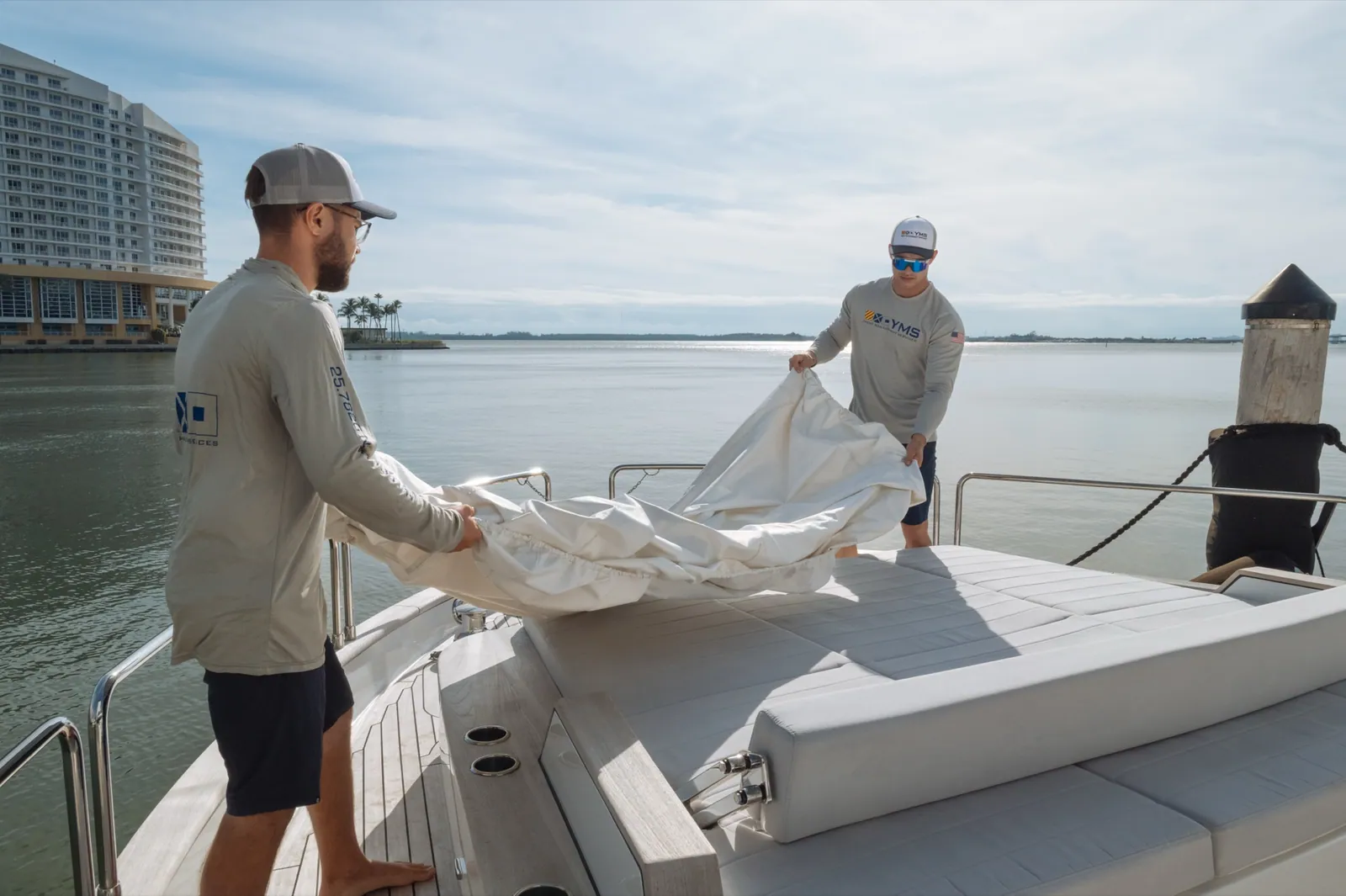
Yacht management in Palm Beach.
A seasonal market, worked on a year round schedule.
The Palm Beach and Lake Worth docks, on the northern edge of the South Florida program.
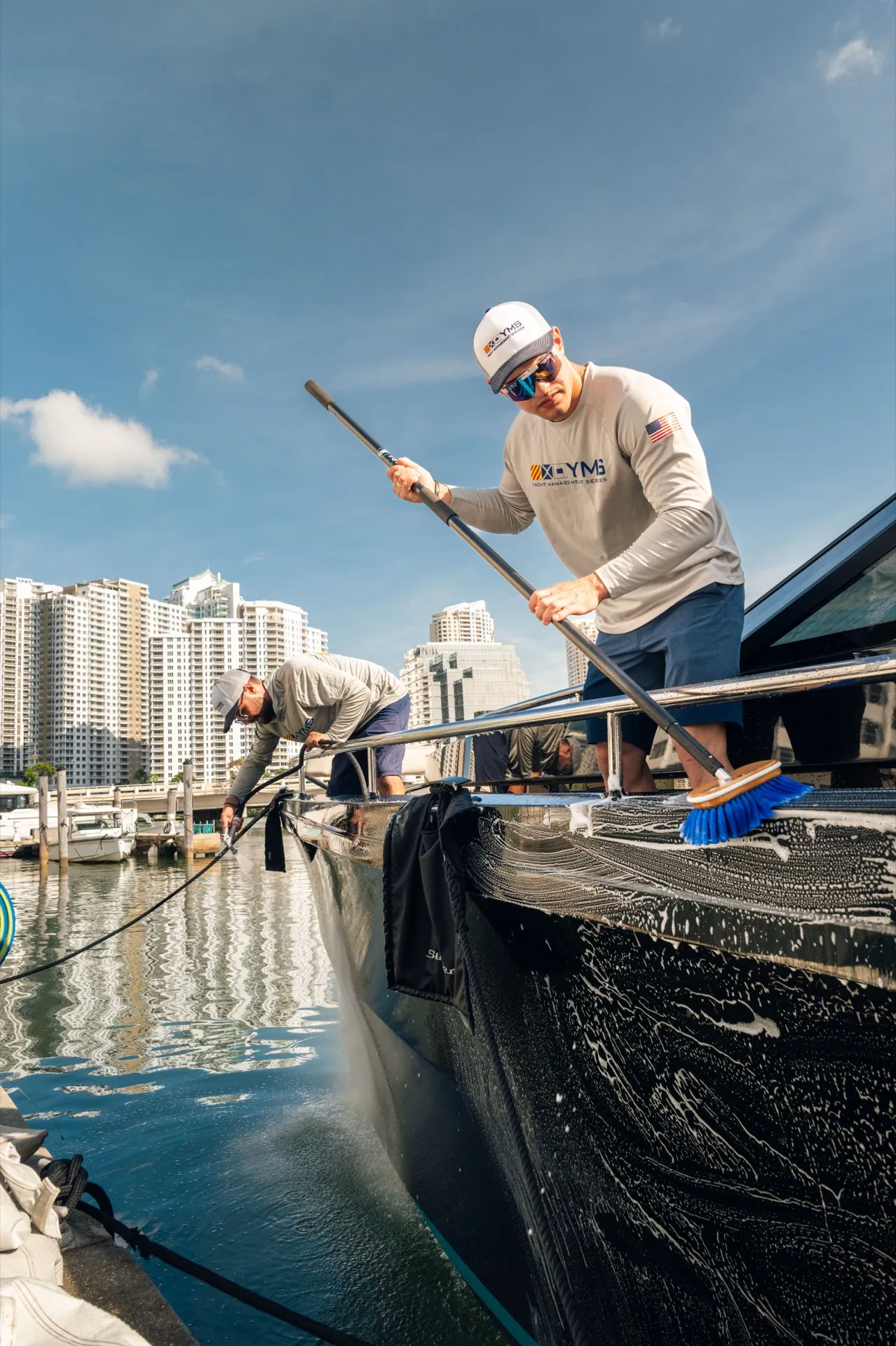
Boats here sit for months, then have to be ready on a Thursday.
Palm Beach runs a seasonal rhythm. Boats arrive, sit for months at a time, and then are expected to be turnkey on a date somebody picked in advance.
Most of the dockage is fixed and it is on the lagoon. Private docks behind houses on the island, slips in the West Palm basins across the Intracoastal, and the yards north of the inlet. The tide moves very little, the water stays warm, and growth on a bottom nobody has looked at since Easter does not know the season is over.
We do not keep an office in Palm Beach and we are not going to imply one. The coordinator and the crews work out of Fort Lauderdale and come up on a schedule. What protects a boat in this market is the interval between visits and the record of what was found.
Sitting is what breaks boats. The program exists to keep systems exercised, batteries and bottoms honest, and the storm plan filed before the season it is needed in.
The year, in the order this market runs it.
The schedule holds steady all year. What changes is the risk it is protecting the boat against.
- In season
- The docks fill and the boat gets used, sometimes on a day of notice. The weight of the program moves to turnover: interior cleaned between trips, exterior washed on the weekly interval, a captain scheduled for the days you would rather be a guest on your own boat.
- May
- The owner goes north. The named storm plan was sourced and the location contracted back in February, and it is on file before June 1, so the plan you leave with is the plan you have. Carriers generally will not permit changes once a storm has a name.
- June through November
- The long stretch. The season is open, the boat is alone, and nothing about it gets noticed by anybody who is not paid to notice. Visits carry on at the same interval they held in season, and the photographs are how you know.
- If the boat goes north
- Part of this fleet does not stay for the summer. We work the tri-state area and the Great Lakes as well and our own captains run deliveries, so a vessel that summers north can sit on one program at both ends of the trip.
- The date you give us
- The wash, the systems check, the interior turnover, the tank levels and the captain are all scheduled backwards from your arrival. The boat is ready when you land instead of starting when you land.
When your season starts and ends is yours. The hurricane dates are not: June 1 through November 30, and the plan has to exist before the first one.
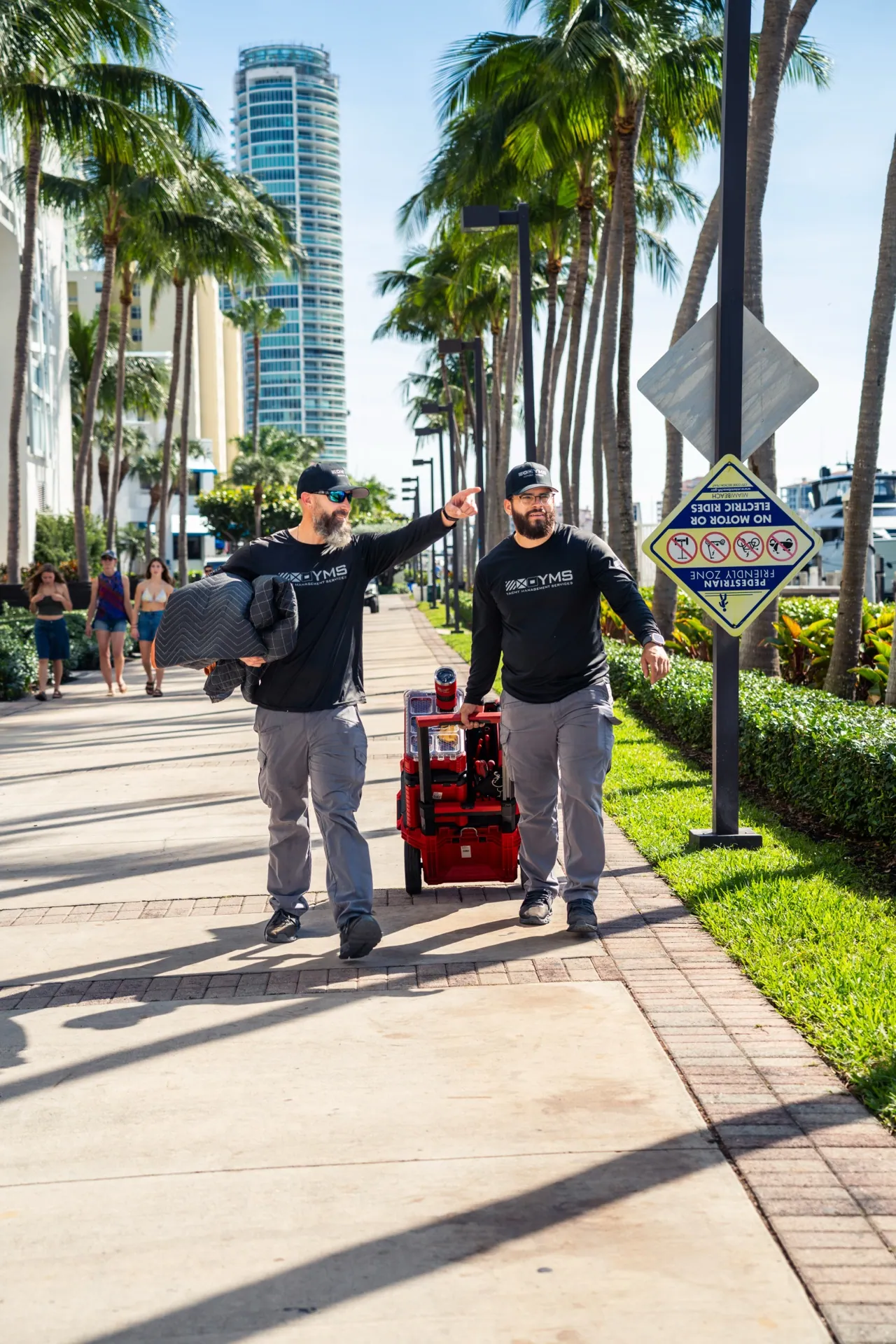
What a visit looks like when nobody is coming down.
A program is one coordinator and one invoice, with the work landing on the weeks the boat is empty. Every service that runs under it is set out on the yacht management page.
- Engines and generators started to temperature Brought up to temperature, fluids inspected, seacocks exercised and sea strainers cleaned. The boat gets exercised on our schedule, well before the first morning you actually want to use it.
- Batteries and the bottom The two things that go quietly while a hull sits still. Charge state watched through the summer, corrosion prevention, and bottom cleaning on a schedule rather than in the week before you fly in.
- Attention continues while it is closed up Deep clean, linens and laundry, galley and heads. A closed boat through a Florida summer is a humidity problem before it is a cleaning problem, and holding it is cheaper than recovering it.
- Photographs every week, all season A custom checklist covering exterior, interior, systems and hours, uploaded weekly and archived, with tank levels read by the crew who were standing on the deck.
- Yard time taken in the off season The months you are not using the boat are the months to haul it. We book the yard, hold the scope in writing, and stand there while the work happens rather than reading about it afterwards.
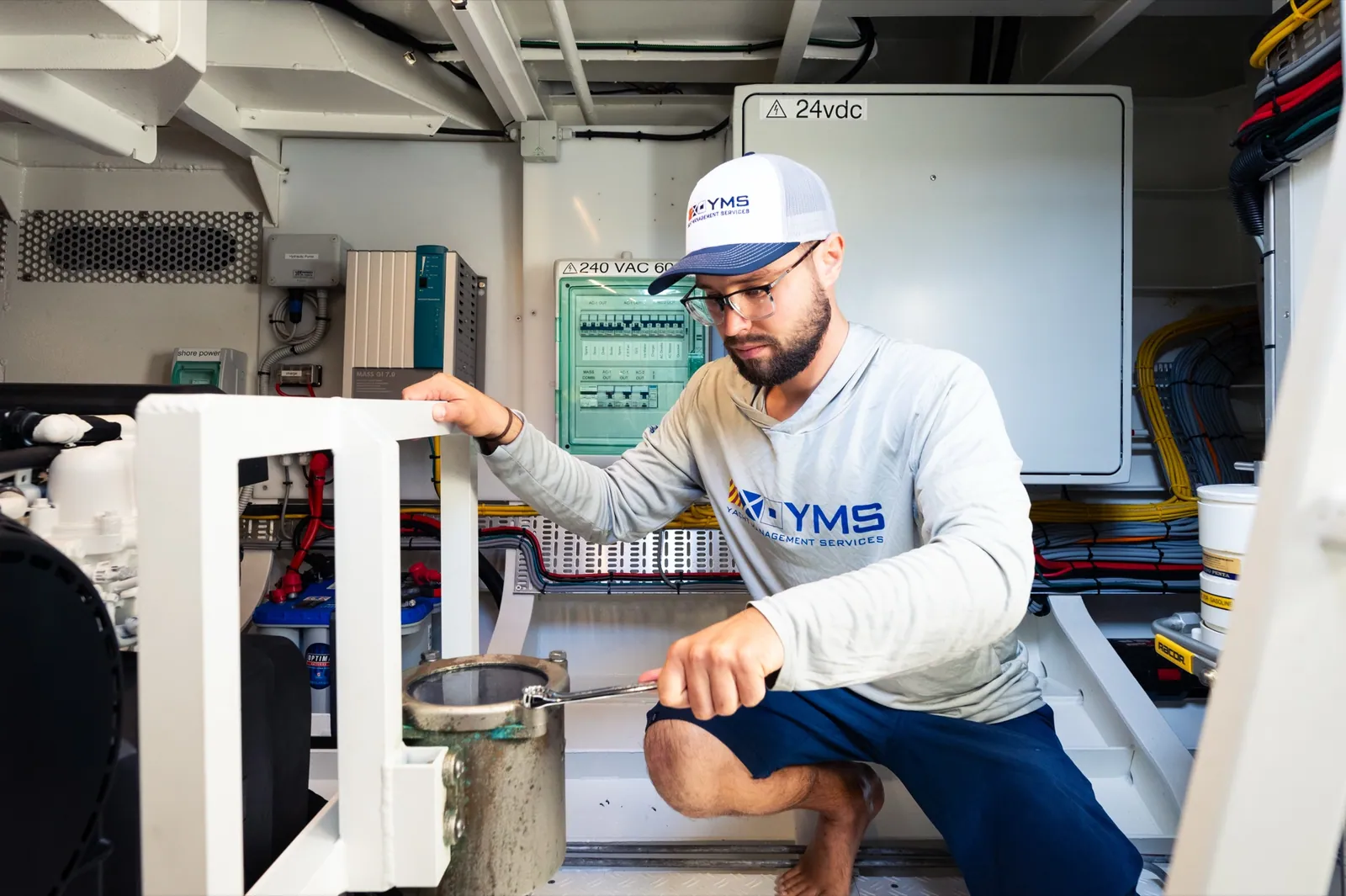
The failures a boat saves up while it sits.
Repairs and upgrades, handled start to finish by our in-house technical team. On a vessel that has been still since spring the list is predictable: air conditioning that has not run, a raw water pump, a strainer packed with growth, a battery that quietly stopped holding in July, hydraulics nobody has moved. Found in August that is maintenance. Found on your arrival weekend it is a canceled trip.

The plan is filed in February. You leave in May.
Hurricane season runs June 1 through November 30, which in this market is the half of the year an owner is least likely to be in Florida. A named storm plan has to say who prepares the vessel, who moves it and when they start, and most carriers will not let you change any of that once a storm has a name.
So it gets written before you go. We source the plan and the location, and keep the documentation your insurer asks for. The renewal notice goes out ahead of the lapse. The further you live from the dock, the more of the relationship that one document is carrying. When the window opens, our own captains move the boat, and the plan sits in Mariner Pro beside the insurance certificate and its expiry date.
Who you are leaving the boat with.
Tell us the date. It will be ready for it.
754-260-7773Call and we will meet you at the boat in Palm Beach and go through it with you. We'll write down what it needs and talk through what a program would actually cover.
The same crews and the same schedule in Fort Lauderdale, Miami and Miami Beach.